
Bamboo-backed TPU vs cotton-backed TPU
Every waterproof sheet has a layer bonded to the underside of the waterproof film. You never see it and you never touch it, but it decides how the whole sheet drapes, how it sounds at 2am, and how it holds its shape after a hundred washes. Here is what changes when that layer is bamboo instead of cotton.
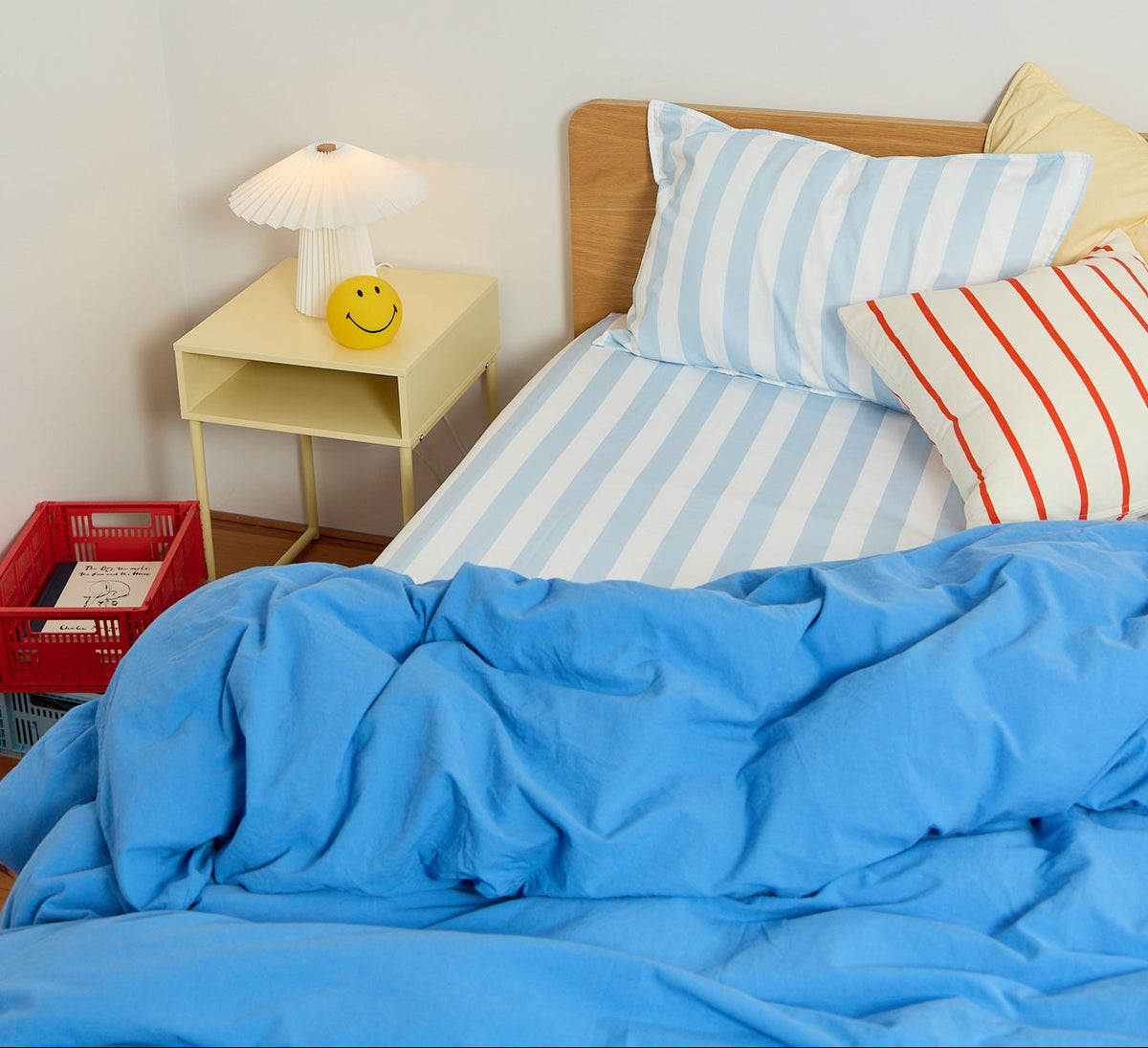
Three layers, one sheet
Most waterproof bedding is two products stacked: a fitted sheet, and a plastic protector underneath it. Ours is one. Once you can see the build, the argument about the backing stops being abstract.
Cross-section, not to scale. The film is the waterproof barrier. The backing is what the film is bonded to.
What actually changes when the backing changes
The waterproof film is the same idea in both builds. The backing is where they separate, and it is the cheaper of the two things to change.
We do not call bamboo antibacterial. Once bamboo is processed into viscose, the antimicrobial compounds in the raw plant do not survive the chemistry that turns it into fabric. Consumer regulators have taken action against retailers for making that claim on bamboo textiles. If a waterproof sheet is hygienic, it is because the film keeps liquid out of the mattress and the sheet can be washed hot. It is not because of the fibre.
We do not claim bamboo cannot shrink. On its own, viscose can shrink more than cotton, not less. What keeps a laminated sheet true to size is that every layer is pre-shrunk and stabilised together before it is sewn. That is a manufacturing decision, not a fibre one, and it is the part worth asking any brand about.
We would rather be the brand that tells you this than the one that gets it wrong in our favour. See all our materials, or ask us anything.
Why some brands switched to cotton
We designed this sheet and then had it manufactured. Since then, other brands have gone to the same manufacturer holding our product and asked for a version of it. At least one had the waterproof layer changed from bamboo to cotton.
That is not a scandal and it is not illegal. It is what happens to any product that works. But it does mean those sheets are not this sheet, and the entire difference sits in a layer that does not show up in a photograph.
What to ask if you are comparing two waterproof sheets
- Ask what the waterproof film is bonded to. Not what the sheet is made of, which is almost always cotton on the face. Ask what the backing is. A brand that developed its own product will answer immediately.
- Ask whether it is TPU or PUL. TPU is bonded with heat. PUL is generally applied with solvents or adhesives and tends to produce a stiffer, noisier laminate. Both waterproof a bed; they do not feel the same.
- Ask for certificate numbers. Oeko-Tex certificates are issued against a number you can check. A brand that has them will hand them over.
- Ask whether it replaces the mattress protector. A bonded sheet is one layer. A sheet sold alongside a separate plastic protector is two, and the second one is the one that crinkles.
If the answers are good, buy the other sheet with our blessing. We would rather you bought a sheet you understand than one you were sold.
What the backing changes, night to night
None of this is about the fibre being magic. It is about what a softer, more stable backing does to a laminated sheet you have to live with.
Every size, the same three-layer build
Bassinet through to king. The construction does not change with the size, and neither does the backing.
Questions worth asking any brand
Does the bamboo layer touch my child?
No. The surface your child sleeps on is 100% certified organic cotton. The bamboo backing sits under the waterproof film, facing the mattress. It is there to carry the film and keep the sheet supple, not to sit against skin.
Is bamboo fabric antibacterial?
Not once it has been processed into viscose, which is what almost all bamboo fabric is. The antimicrobial compounds in the raw plant do not survive the chemical process that turns bamboo into a textile fibre, and consumer regulators have penalised retailers for advertising otherwise. We chose bamboo for how it feels and how it behaves in a laminate, not for a hygiene claim.
Will the sheet shrink?
All three layers are pre-shrunk and stabilised together before the sheet is sewn, which is what keeps a laminated sheet true to size. Wash warm rather than hot and avoid a high dryer heat and it will hold its shape. Our care guide has the full routine.
What is the difference between TPU and PUL?
Both are polyurethane waterproof layers. TPU is bonded to fabric with heat. PUL is more commonly applied using solvents or adhesives and generally produces a stiffer, noisier laminate. We use TPU, free from phthalates, because it stays flexible and quiet in a sheet you sleep on every night.
Is this the same as other brands' waterproof sheets?
Some are very similar on the face and different underneath. The question that separates them is what the waterproof film is bonded to. Ours is bonded to bamboo. Several sheets now on the market are bonded to cotton, which is cheaper to produce. Ask any brand what their backing is before you compare prices.
Does it replace a mattress protector?
Yes. The waterproof layer is inside the sheet, so you do not need a separate plastic protector underneath. That is one layer to strip and wash at 2am instead of two. More on that in our mattress protector guide.
Can I see the certifications?
Yes. Our cotton and bamboo are Oeko-Tex certified and the TPU is free from phthalates. Email us and we will send the certificate details through.
Feel the difference the layer makes
Soft organic cotton on top, a hidden TPU film in the middle, bamboo underneath. One sheet that protects the mattress and still feels like bedding.


