
The cot mattress protector that is also the sheet
Most cot mattress protectors are a crinkly extra layer you hide under the sheet. Ours is the sheet. Soft organic cotton on top, a hidden waterproof layer underneath, in every Australian cot size from bassinet to standard cot.
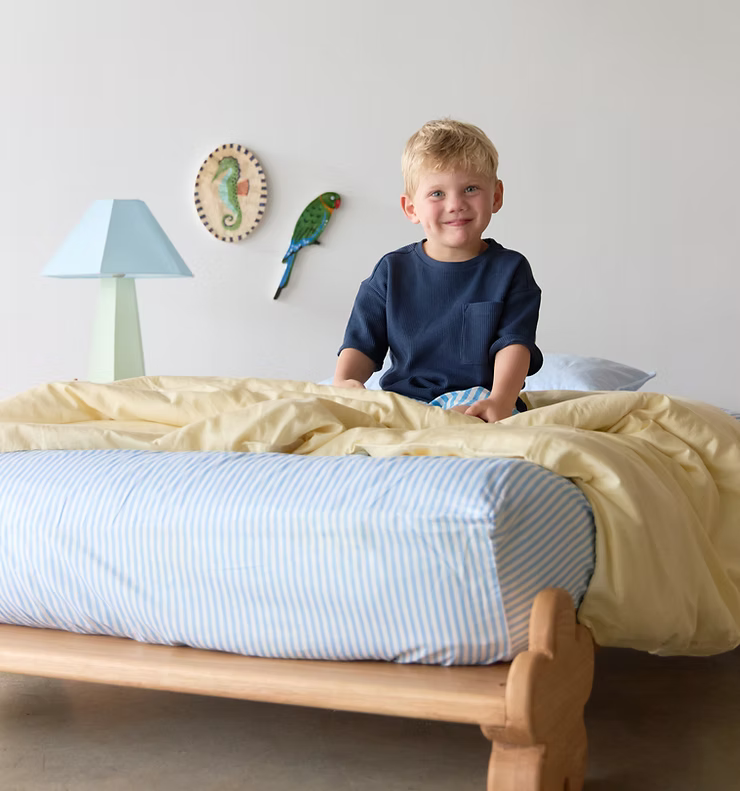
Why a cot needs a mattress protector, and why most of them are annoying
A cot mattress takes more punishment in two years than a queen mattress takes in ten. Nappy leaks, reflux, teething drool, a bottle that tipped, the first stomach bug. None of it is optional and all of it soaks straight into foam if nothing is stopping it.
So almost every parent buys a cot mattress protector. And then almost every parent discovers the same three problems: it crackles every time the baby rolls, it slides out of place and bunches under the sheet, and it means making the cot twice - once with the protector, once with the sheet - at midnight, in the dark, with a crying baby on your hip.
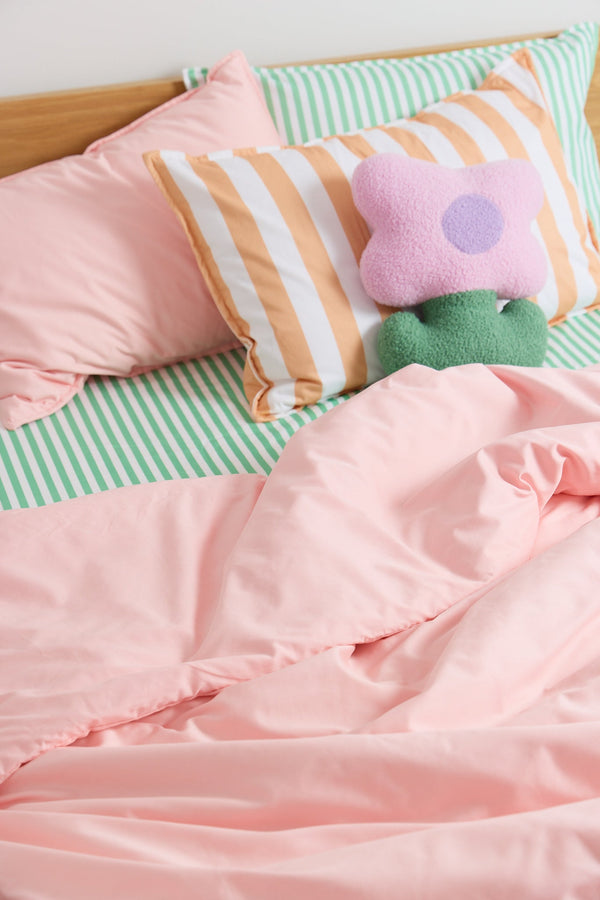
Organic Peach removes the second layer entirely. The waterproof barrier is built into the fitted sheet. One piece of fabric goes on the mattress. The surface your baby sleeps on is 100% certified organic cotton. The mattress underneath stays completely dry. And a 2am change is one sheet off, one sheet on, back to bed.
It works the same way whether you are protecting a bassinet, a co-sleeper, a travel cot or a standard cot.
Waterproof cot mattress protectors, every size
Each one is a fitted sheet and a mattress protector in the same piece of fabric. Pick the size that matches your mattress.
Protection you notice, plastic you do not
Everything a cot mattress protector has to do, in something that still feels and sounds like a normal cot sheet.
Three layers, one cot sheet
A normal cot setup is two products stacked: a mattress protector, and a fitted sheet over the top. Ours is one. Here is what is inside it.
Cross-section, not to scale. The film is the waterproof barrier. The backing is what the film is bonded to.
Find the cot mattress protector that fits your cot
Four cot sizes cover almost every Australian cot, bassinet and travel cot. Pick yours, or add the pieces that go with it.
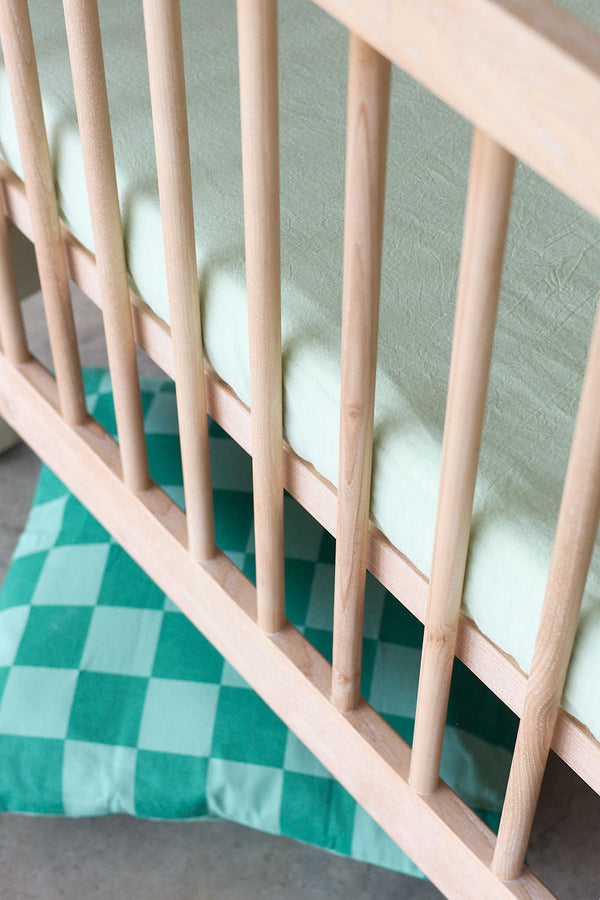
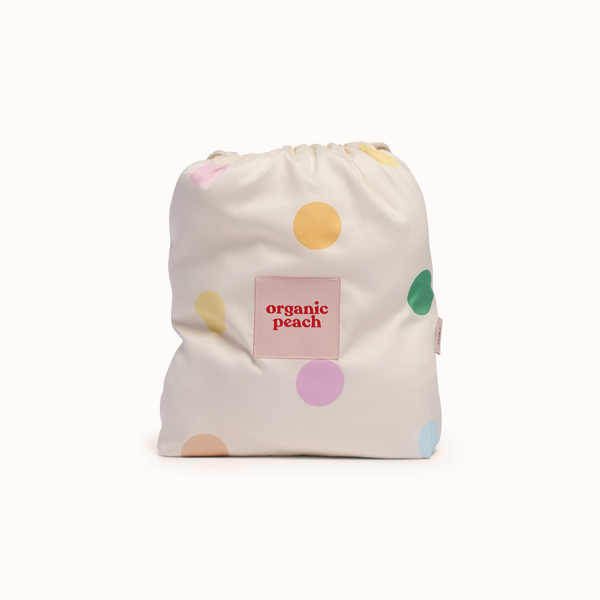
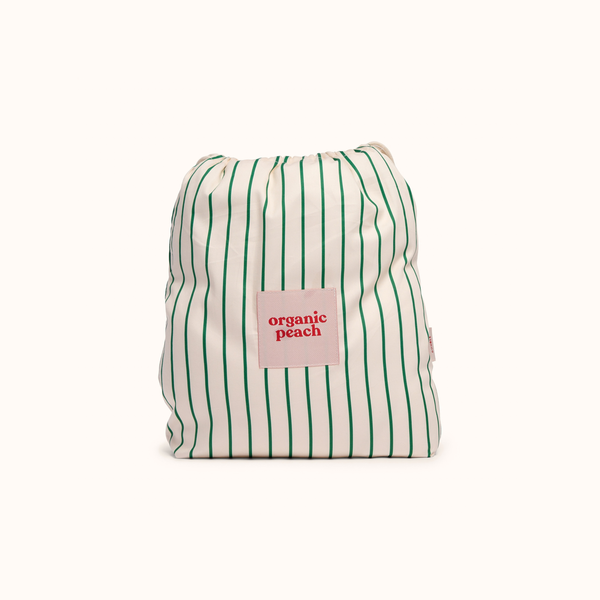
Cot mattress protector sizes in Australia
Cot mattresses in Australia are not all one size. Two cots that look the same can be 10cm apart, which is the difference between a sheet that grips and a sheet that pops a corner at 3am. Measure the mattress, not the frame, then match it below.
| Size | Mattress it fits (L x W x depth) | Typically used for | Shop |
|---|---|---|---|
| Small Bassinet | 81 x 41 x 12 cm | Pram bassinets, Moses baskets, the SNOO | Bassinet sheets |
| Co-sleeper | 85 x 51 x 19 cm | Most co-sleepers, bassinet mattresses, change mats | Co-sleeper sheets |
| Compact / Mini Cot | 120 x 62 x 22 cm | Travel cots and most daycare cots | Compact cot sheets |
| Standard Cot | 132 x 71 x 22 cm | Australian and US standard cot mattresses | Standard cot sheets |
| Single (cot to bed) | 188 x 92 x 40 cm | The next bed after the cot | Single sheets |
Standard cot is the one most Australian parents need. If your mattress measures close to 132 x 71cm, that is your size. Not sure? The cot sheet size guide has a size finder that matches your measurements in one tap.
2-in-1 sheet vs a separate cot mattress protector
Both keep the mattress dry. The difference is what it costs you at 2am, and what your baby is actually lying on.
The waterproof layer covers the sleep surface, not the sides of the mattress. If a nappy leaks over the edge of the cot mattress rather than onto the top of it, the side of the mattress can still get wet. Several customers have told us they would like the waterproofing wrapped around the sides, and they are right that it is a real limit.
We also do not claim it is a barrier product for anything other than liquid. It is not marketed as a dust mite or allergen barrier, and we would rather say that plainly than let you find out later.
Why a firm fit matters more in a cot
The point of a cot mattress protector is to protect the mattress. The point of how it fits is something else entirely.
Safe sleep guidance in Australia is consistent that cot bedding should be firm-fitting, with no loose or bunched fabric that a baby can pull over their face. That rules out the two things parents most often reach for: a towel laid over the sheet, and a flat waterproof mat tucked under it. Both move.
This is the practical argument for a protector that is built into the fitted sheet rather than layered under it. There is one piece of fabric on the mattress, held by deep elasticated corners, and nothing between the sheet and the mattress that can shift or ruck up during the night. It is also why getting the size right matters more in a cot than it does in a queen bed - a sheet that is too big is a sheet that can come loose.
For current safe sleep recommendations, Red Nose Australia is the authority parents and health professionals here work from. Always follow your cot manufacturer instructions for the mattress itself.
How to wash a waterproof cot mattress protector
A waterproof cot mattress protector only keeps working if the waterproof layer survives the wash. Ours is a TPU film heat-bonded to the fabric rather than a coating sprayed on top, so it holds up to the wash cycle a cot sheet actually gets. A few habits keep it that way:
- Warm or cold wash, not hot. High heat is what breaks down waterproof films over time.
- Skip the fabric softener. Softener leaves a residue that coats the cotton and stops it absorbing, which is the opposite of what you want on the sleep surface.
- No bleach, no vinegar soak. Both attack the bond between the film and the fabric.
- Low tumble or line dry. Line drying in the shade is kindest to both the cotton and the film.
- Two sheets minimum. One on the cot, one in the wash. At 2am you want the spare in the drawer, not in the machine.
The full routine, including what to do with a middle-of-the-night change, is in our care guide.
Cot mattress protector FAQs
Is this a cot mattress protector or a cot sheet?
Both, in one piece of fabric. It is a fitted cot sheet with a waterproof TPU layer bonded inside it, so it protects the mattress and gives you an organic cotton surface to lay your baby on. You do not need a separate protector underneath it.
What size cot mattress protector do I need?
Standard cot suits most Australian cots and fits a 132 x 71 x 22cm mattress. Compact or travel cots are 120 x 62 x 22cm, co-sleepers 85 x 51 x 19cm and small bassinets 81 x 41 x 12cm. Measure the mattress rather than the frame, then check it against our cot sheet size guide.
Will it crinkle or feel like plastic?
No. The waterproof film sits under the organic cotton and is heat-bonded inside the sheet rather than being a separate plastic mat, so there is no loose layer to crackle when your baby moves.
Is it actually waterproof, or just water-resistant?
Waterproof. The sleep surface has a continuous TPU film behind the cotton, so liquid does not pass through it to the mattress. The one honest limit: the film covers the top surface, not the sides of the mattress, so a leak that goes over the edge can still reach the side of the mattress.
How do I wash it without wrecking the waterproofing?
Machine wash warm or cold with your other bedding, no fabric softener, no bleach, and tumble dry low or line dry in the shade. High heat and softener are the two things that shorten the life of a waterproof layer. Full instructions are in the care guide.
Is it safe for a newborn cot?
It is a firm-fitting fitted sheet with deep elasticated corners, which is what safe sleep guidance in Australia asks of cot bedding, and it removes the loose flat mat that parents often put under a sheet. Get the size right so there is no slack fabric, follow your cot manufacturer instructions for the mattress, and check Red Nose Australia for current safe sleep advice.
What is the waterproof layer made of?
A thermoplastic polyurethane (TPU) film, free from phthalates, heat-bonded to a bamboo backing. There is no PVC and no solvent-applied coating. We wrote up the difference the backing makes in bamboo-backed vs cotton-backed TPU.
How many should I buy?
Two, for the same reason everyone ends up with two: one is on the cot and one is in the wash. Parents of a baby in the reflux or teething stage usually tell us three is the number that stops the 2am scramble. Our bundles price the second one better than buying it separately.
Can I order through NDIS?
Yes. We handle NDIS orders and invoicing for plan-managed and self-managed participants. The details are on our NDIS page.
One sheet. Dry mattress. Half the 2am work.
Swap the crinkly protector for a cot sheet that does both jobs. Find your cot size and see the difference on the first night.


